

Prostate cancer is the most common cancer in men. It is the unregulated growth of abnormal prostate cells.
Black African Caribbean men are twice more likely to be diagnosed with prostate cancer (1:4) than white men (1:8) in the UK. This fact has been confirmed in several medical studies. The PROCESS study confirmed:
Prostate Cancer UK has an easy to use risk checker that can help in answering whether you should see a GP. If in doubt, seek medical advice.
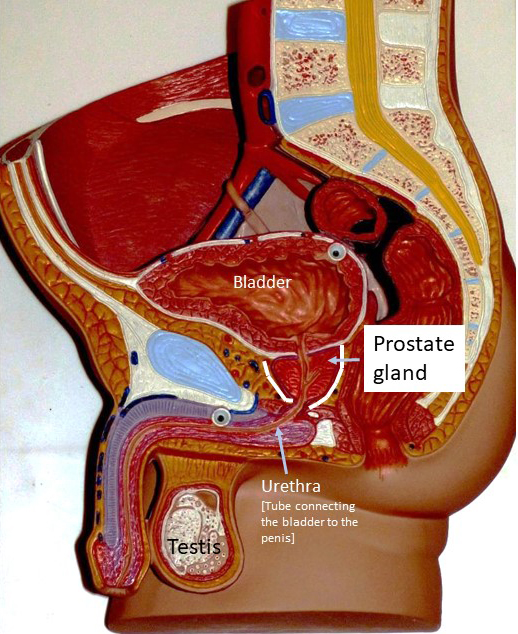
Prostate cancer symptoms are frequently similar to those caused by benign prostate hyperplasia (BPH: enlarged prostate gland)
Symptoms may include any of the following:
If you have any of these symptoms – seek medical advice.
Not all men with prostate cancer show symptoms!
Currently the UK does not have a national prostate cancer screening programme. Due to recent advances in medical technology and clinical study data the prospects of introducing prostate screening are improving. A large multi-funder clinical trial (Transform Trial) is due to commence in 2024/5 to test if and which diagnostic techniques might be used for a national screening programme.
Prostate Cancer UK (PCUK) have spearheaded a consortium of prostate cancer clinicians, scientists, and community stakeholders to produce a new, updated ‘Prostate Consensus Statement’. Friends and Bredrins are proud to have participated in this piece of work.
Presently all men over 50 years old are entitled to free prostate cancer testing on the NHS.
Men with African/Caribbean ancestry should seek medical advice at a younger age (45).
Any man experiencing symptoms (see above) should see their GP sooner.
GPs should proactively discuss prostate cancer testing with black men age 45 or over, white men age 50 or over, all men with a family history of prostate cancer (father, brother, uncle)
There are 2 simple tests to help your doctor decide if you need additional investigations for prostate cancer
The ‘finger test’ or Digital Rectal Exam (DRE) can be off-putting to some men. The DRE test is on the decline because only a small percentage of prostate cancers are detectable by this technique, and because it may deter men from seeking clinical advice. If you’re offered the test but are anxious about it, let your clinician know; ultimately it’s your decision whether to have it, or not.
Treatment for prostate cancer is improving and is based on an individual’s need, and risk of disease progression
There are many factors to consider when choosing treatment, including the risk of tumour progression (cancer grade/aggressiveness), clinical stage (how advanced the cancer is: has it spread to tissues outside the prostate), other risk factors (including family history, age, fitness), treatment availability, and personal preferences and desired outcomes
The treatment pathway involves 2-way discussion between you, the patient, and your medical team
The medical team will use multiple techniques for determining the most appropriate treatment to offer. These include microscopic examination of surgically removed prostate tissue (to determine cancer grade), medical imaging techniques (for clinical staging), and physical examination, among others
TNM (Tumour, Node, Metastasis) Staging is used by clinicians to describe if the tumour is confined to the prostate gland (T1, T2), if it has spread to tissues local to the prostate (T3), or to more distant tissues in the pelvic region (T4)
Presence (N1) or absence (N0) of cancer in close-by lymph nodes (components of the immune system)
Whether the cancer has spread (M1; a process called metastasis) or not (M0)
This is a measure of cancer ‘aggressiveness’ ie. Risk of cancer spread
Surgically removed prostate tissue is microscopically examined to assess tissue architecture and variation across the sample
The Gleason Score is expressed as a range of values (1-5), where 1 represents tissue closely resembling normal prostate tissue. Sometimes, two predominant tumour tissue patterns is seen and each is separately scored: the final Gleason Score is obtained from the sum of both scores.
A score of 1-6 is regarded as slow growing cancer (low risk of cancer spread)
A score of 7 is regarded as intermediate risk of cancer spread
A score of 8-10 is regarded as high risk of cancer spread
Many different types of treatment are available for prostate cancer and it can be bewildering deciding which option to choose. For many, being confronted with so much new and unfamiliar information can be an anxious time, especially when it feels like making the correct decision can be life-changing.
Do your research: collect information from leaflets, the internet, cancer charities, and through discussion with health professionals. Talk to prostate cancer survivors about their experiences. Consider joining a community cancer group for support.
The treatment you receive is dependent on several factors:
The NHS has a new online tool, Predict Prostate for predicting individual survival according to treatment in patients with early stage prostate cancer; it is unreliable for men with advanced cancer
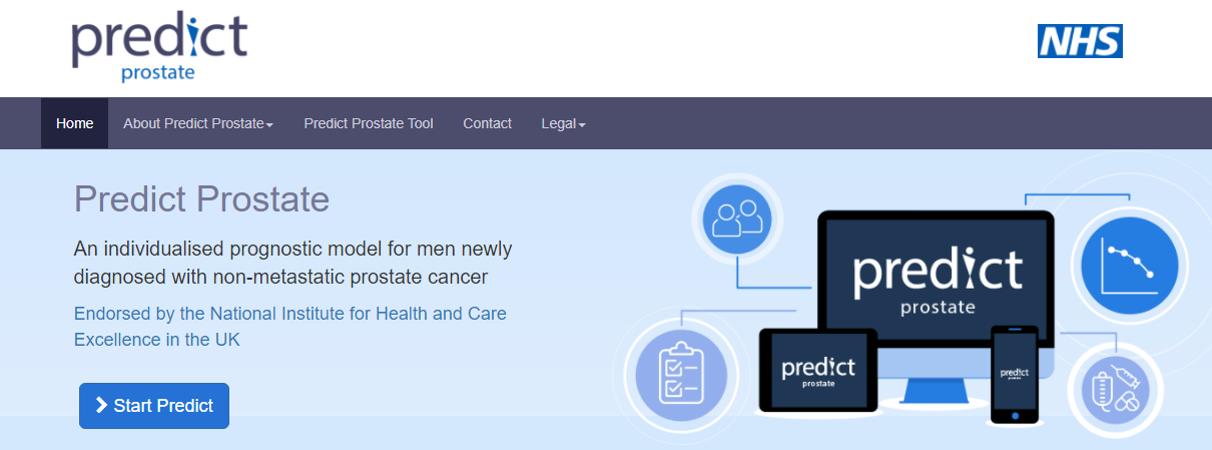
The model compares survival outcome from inputting clinical data and the type of treatment being offered. Although it’s possible for patients to use this tool, it is perhaps best to use it in consultation with a medical professional.
Type of treatment is made on a case by case assessment and requires discussion involving you and your medical team. Many different types of treatment are available and it can be bewildering deciding which option to choose
Do your research: leaflets, internet, cancer charities, discussion with health professionals. Talk to prostate cancer survivors about their experiences. Consider joining a community cancer group for support
Treatment for low grade, early-stage cancer broadly aims to remove the prostate gland or focally destroy the cancerous cells embedded in it, to achieve a cure
Treatment for high grade, advanced-stage cancer primarily aims to stop or slow prostate cancer growth and to treat symptoms if the cancer has spread
All treatments have the potential for causing unwanted side-effects and the risk of developing these should be discussed with your health professional. For more information on treatments and their side-effects, visit the NHS website.
Active Surveillance Some men with low grade/stage cancer do not require treatment but undergo regular periodic screening to detect changes in the cancer behaviour and possible disease progression
Surgery Removal of the prostate gland (radical prostatectomy) and radiation (radiotherapy) treatment are performed to achieve a cure in men with early stage localised cancer. Increasingly, surgery is performed using robotically-aided instruments to minimise collateral tissue damage. Nerve-sparing surgery is sometimes possible in suitable patients; this can maintain being able to achieve penile erection
Radiotherapy This can be administered by external beam therapy, or by targeted placement of radiation-emitting pellets in the prostate gland in a procedure called brachytherapy
Hormone therapy This treatment alone does not cure prostate cancer but may be given with other treatments. It works by blocking the growth-promoting effect of testosterone hormone on prostate cells, and so slows down cancer growth. This procedure is also known as ‘chemical castration’ because it neutralises the male hormone testosterone produced in the testes
Targeted therapies These therapies aim to destroy prostate cancer cells while sparing damage to surrounding tissues. Consequently recovery time may be reduced, and sexual function and bladder control can be preserved
High-intensive focused ultrasound (HIFU) This targeted therapy may be offered to patients with localised prostate cancer. It involves inserting a probe (via the rectum) that emits high-frequency soundwaves that cause cancer cells to heat up and die. Because this is a relatively new treatment, it is not widely available
Cryotherapy This targeted therapy involves placement of thin needles into the prostate gland that are used to focally ‘freeze-burn’ and kill cancer cells. Similar to HIFU, the procedure is still undergoing assessment and is not widely available
It is not usually possible to totally eliminate or cure advanced prostate cancer, so treatment is designed to retard or stop cancer growth, and to improve consequential symptoms resulting from cancer spread
The main treatment approaches offered are hormone therapies to block release or uptake of male androgen hormones, radiotherapy, and chemotherapy. Steroid drugs may be given to supplement therapy
Sometimes the cancer is described as ‘castration-resistant prostate cancer’ because conventional hormone therapy does not stop cancer growth. Alternative drugs may be given to slow prostate cell growth
If the cancer has spread to bones, bisphosphonate and an armoury of newer targeted drugs can be given to slow down bone loss and reduce bone pain. Steroids may be offered to shrink the prostate tumour
Despite best efforts, the cancer may become life threatening and unresponsive to treatment. At this stage the treatment approach changes to palliative care: this includes being supported and given effective pain management
Further information about prostate cancer and its treatment is available from:
Prostate Cancer UK
Cancer Research UK
Macmillan Cancer
Orchid – Fighting Male Cancer